
- Our Services
Challenge We Tackle

You will talk to Avinash, not a sales rep.
50Cr+Ad spend managed50+Brands served7Industries - Resources
Innovative Thinking


You will talk to Avinash, not a sales rep.
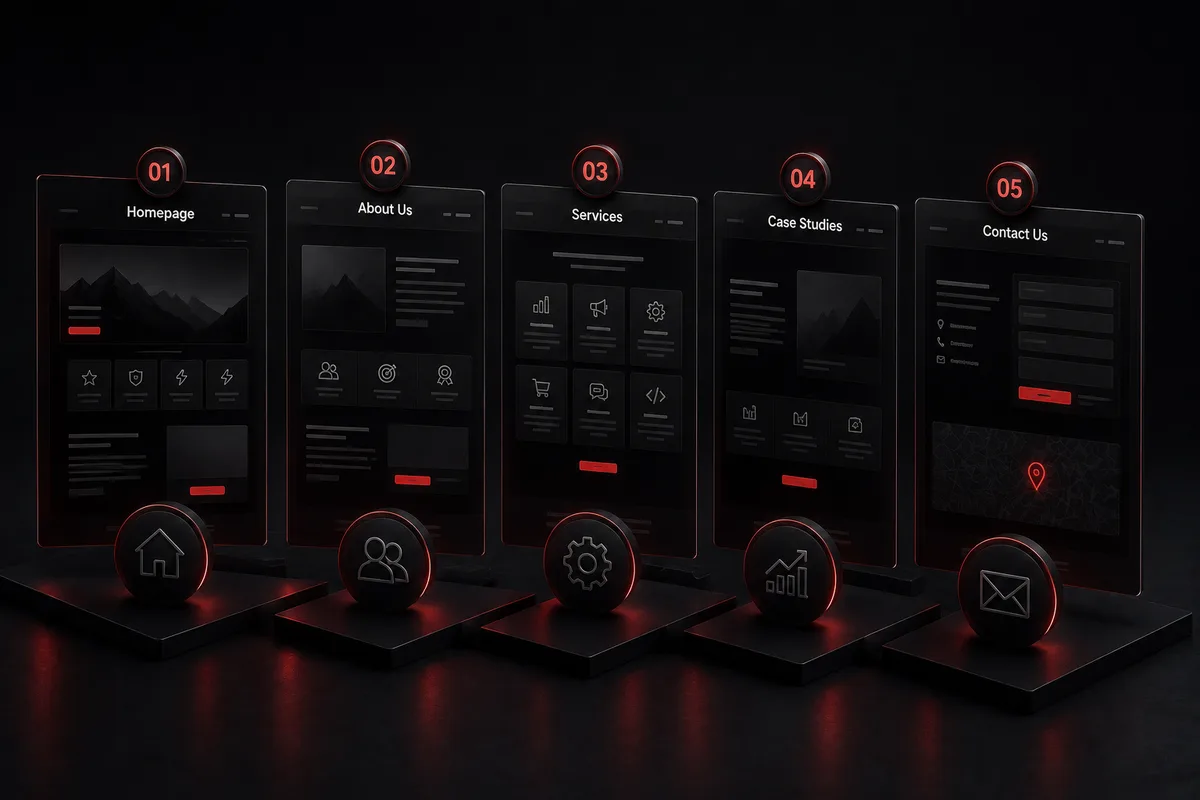
The problem. Most business websites have between twenty and sixty pages. Traffic and enquiries come from about five of them. The other pages are not harmful, but they absorb redesign budget and review meetings in rough proportion to their number rather than their contribution.
If you are planning a rebuild, or wondering why a recent one did not change your enquiry count, it is worth knowing which five pages actually carry the work.
Redesigns get judged on how the homepage looks, because that is what everyone sees in the review. Meanwhile the pages that convert are often untouched, or worse, restyled without anyone checking whether the new version still answers the questions the old one did. Enquiries fall after launch and nobody can say why.
Not your services index. The specific page for the thing they searched for. This page has one job: confirm within a single screen that you do exactly what they typed, and make the next step obvious.
It fails when it opens with company history, when the enquiry action is below three screens of scrolling, or when it describes a category rather than the specific service. If someone searched for a particular service and lands on a page listing nine, they have to do the sorting themselves, and a proportion of them will not.
Case studies, results, client work. Whatever you call it, this is where a considered buyer goes after deciding you might be plausible.
The version that works contains specifics: what the situation was, what was done, what changed, over what period. The version that does not contains logos and adjectives. A single case study with real numbers outperforms twenty client logos, because logos prove someone paid you, not that it worked.
Many Indian service businesses refuse to publish anything about price, on the reasoning that it depends. It does depend. Publishing nothing still costs you.
Buyers who cannot find any indication of cost assume the worst and leave, and those who do enquire include a large share who were never in your range. You do not need a price list. A range, a starting point, or an explanation of what drives the number does most of the work, and it filters before your sales team spends the hour rather than after.
Consistently among the most-visited pages on any service site, and consistently the least considered. People go there to decide whether you are real.
What answers that: actual faces and names, where you are based, how long you have been operating, who you have worked with. What does not: a paragraph about being passionate about excellence, and stock photography of a team that is not yours. Visitors are unusually good at spotting the second, and it costs more credibility than the page gains.
The last step, and frequently the one that quietly loses people. Every field you add costs enquiries. Ask for what you need to make the first contact and nothing more, and offer a route for people who do not want to fill anything in at all. In India that usually means a visible WhatsApp option and a phone number that a human answers.
Then say what happens next. A single line telling someone they will hear back within one working day measurably reduces abandonment, because the uncertainty is part of what stops people submitting.
Open your analytics, sort landing pages by entrances, and look at where enquiries actually originate. If the five above are not your top five, that is the finding. Then, before any redesign, write down what each of those five pages must accomplish, and review the new version against that list rather than against how it looks.
Everything else on the site can be tidy and unremarkable. These five have to work.
Our website design and development page explains how we structure sites around this, or send us your site and we will tell you which of the five is weakest.

Question about SEO, ads or leads? Ask away.
 How can we help?Ask our assistant, or talk to a human.
AI can make mistakes. For quotes, use WhatsApp.