
- Our Services
Challenge We Tackle

You will talk to Avinash, not a sales rep.
50Cr+Ad spend managed50+Brands served7Industries - Resources
Innovative Thinking


You will talk to Avinash, not a sales rep.
The problem. Someone tells you WhatsApp marketing is essential in India, which is true, and that it is free, which is not. The confusion comes from there being two different products with the same name, and businesses routinely start on the wrong one and hit a wall six months later.
Building your customer communication on the free app feels sensible until the day it stops scaling. The number sits on one person phone. Nobody else can see the conversation history. Broadcast lists cap out. There is no record when that person leaves, and the relationship leaves with them.
Migrating later is genuinely painful, because the conversation history does not come with you. The cost of starting on the wrong product is paid entirely in the future, which is why so many businesses pay it.
WhatsApp Business app. Free, installs on a phone, gives you a catalogue, quick replies and away messages. Genuinely good for a small operation with one person handling enquiries.
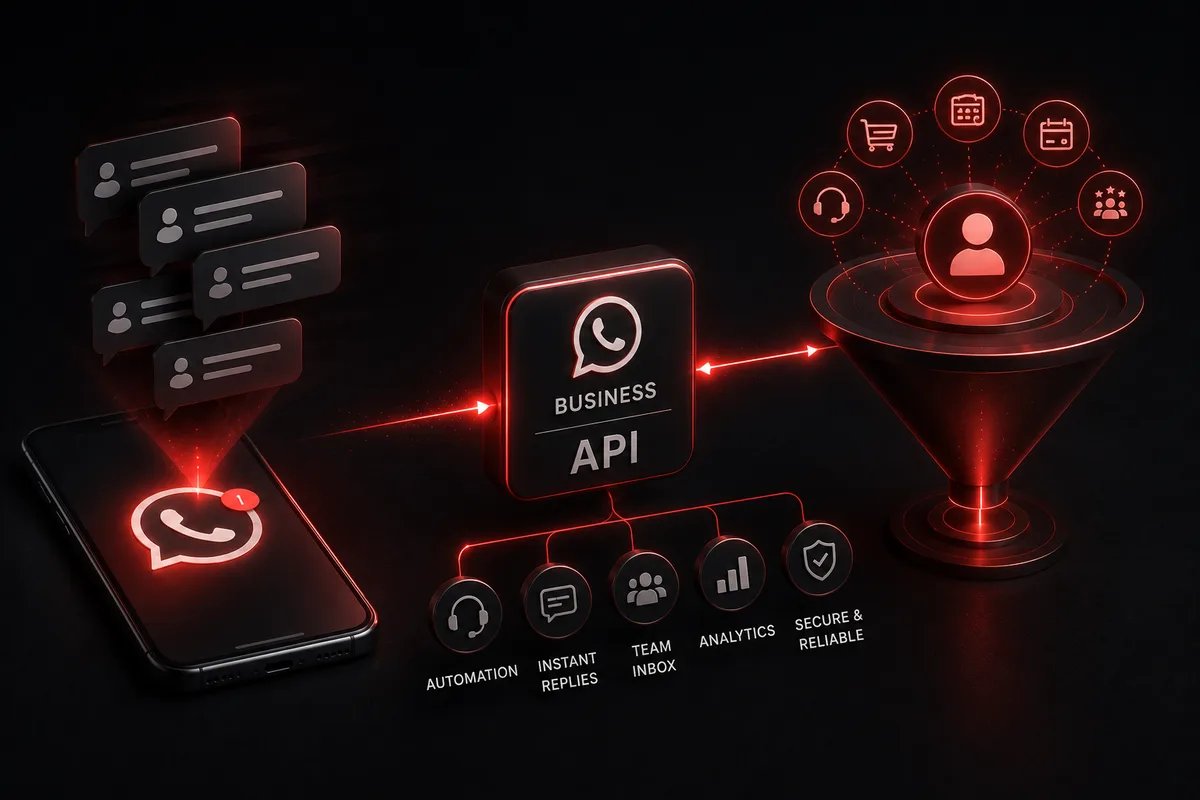
WhatsApp Business Platform, usually called the API. Not an app at all. It connects WhatsApp to your own systems, supports multiple agents on one number, keeps history centrally, and allows automated flows. It has no interface of its own, so you use it through a provider.
The API is where the cost is, and it comes in two parts that are easy to conflate.
Meta charges per conversation, not per message, in a window that covers a set period once opened. Rates differ by conversation category, and the important distinction is who started it. A conversation the customer initiates costs less than one you initiate. Marketing messages you send out are the most expensive category, and service conversations where you are replying to a customer are cheaper or, within a window after their message, free.
Your provider charges a platform fee on top, monthly or per message depending on who you use. Two businesses sending identical volume can pay very different totals depending on this layer, and it is the part worth negotiating.
The practical consequence: the cost of WhatsApp is driven mostly by how many conversations you start. A business using it to answer enquiries pays very little. A business blasting promotional broadcasts to a large list pays a great deal, and usually gets worse results.
If none of those are true yet, stay on the free app. It is a perfectly good product and moving early buys you complexity you do not need.
Treating it as an email replacement. WhatsApp arrives in the same place as messages from family. The tolerance for promotional volume is far lower, and the punishment is not being ignored, it is being blocked. Blocks damage your quality rating, which restricts how many messages you can send at all.
Paying to start conversations that customers would have started anyway. A click-to-WhatsApp ad, where the customer sends the first message, is cheaper and converts better than a broadcast to a cold list.
Automating past the point of usefulness. A bot that cannot answer and will not hand over is worse than no bot. Automate acknowledgement and routine answers, then hand to a person the moment it needs judgement.
The free app is right until you need multiple agents, a central record or real automation. The API costs per conversation, weighted heavily toward the ones you initiate, plus a provider fee worth shopping around for. Spend on conversations customers start, and treat outbound as a scarce resource rather than a channel to fill.
Our WhatsApp and email marketing page covers how we set this up, or tell us your volumes and we will tell you whether the API is worth it yet.

Question about SEO, ads or leads? Ask away.
 How can we help?Ask our assistant, or talk to a human.
AI can make mistakes. For quotes, use WhatsApp.