
- Our Services
Challenge We Tackle

You will talk to Avinash, not a sales rep.
50Cr+Ad spend managed50+Brands served7Industries - Resources
Innovative Thinking


You will talk to Avinash, not a sales rep.
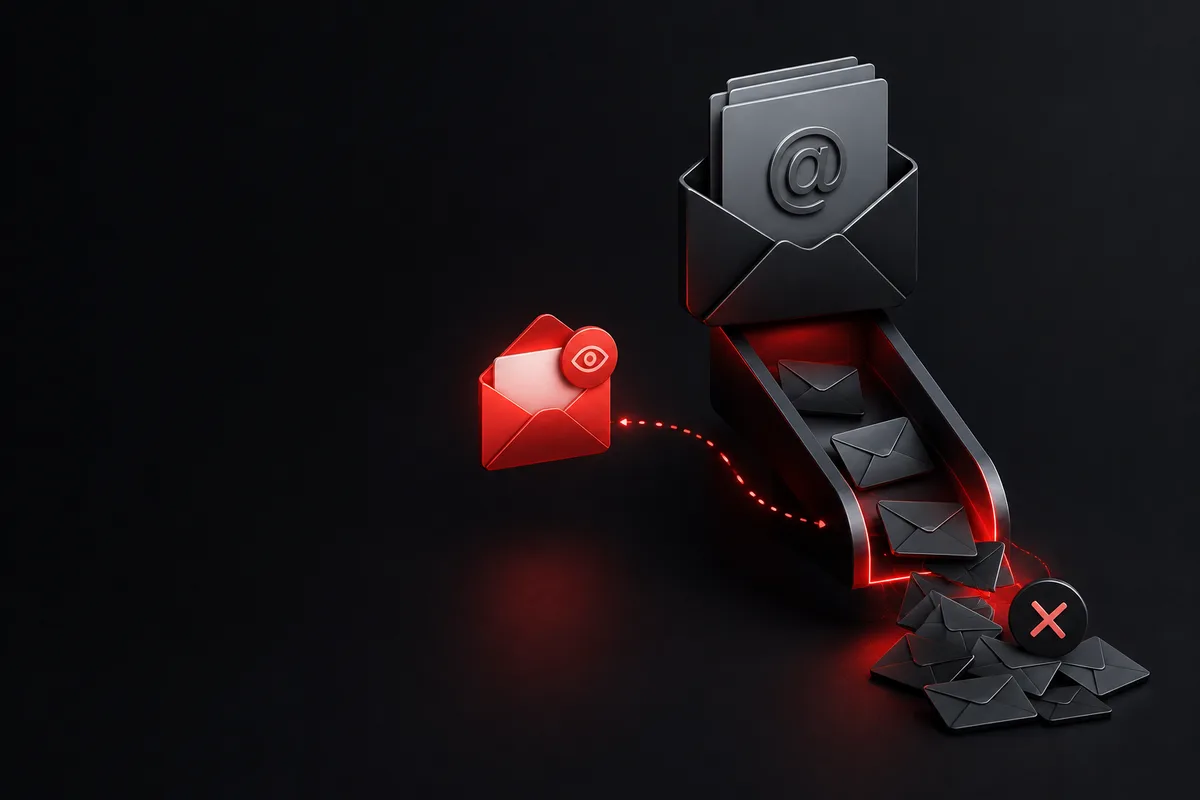
The problem. The list has eleven thousand people on it. Two years ago a campaign to that list produced enquiries. Now the same list, the same design and roughly the same offer produce almost nothing, and the open rate has been sliding for months without anyone deciding what to do about it.
The instinct is to blame the list size, or buy a new one. Both make it worse. What has usually happened is that the list stopped being a list of interested people and became a list of addresses.
A decaying list costs more than the subscription. Sending repeatedly to people who never open teaches inbox providers that your mail is unwanted, and they respond by routing more of it to spam, including the mail to people who would have opened.
So the decline accelerates on its own. Each low-engagement send makes the next one land slightly worse, and the eventual result is that your most engaged customers stop seeing you at all. That is the part that makes this urgent rather than merely disappointing.
The list aged. People change jobs and abandon addresses. A B2B list decays by a meaningful share every year through nothing but ordinary staff movement, with no fault on your side.
The sending pattern changed. Long silence followed by a sudden burst is the pattern that most reliably triggers filtering. Consistency matters more than frequency.
Content drifted toward selling. People subscribed for one reason and began receiving another. Each promotional-only send trains a few more people to ignore your sender name, and that habit is hard to reverse.
Everyone received the same email. A customer of three years and someone who downloaded a guide last week got identical mail. One of them found it irrelevant, and probably both.
This is the first move and it feels wrong, because it means mailing far fewer people. Do it anyway.
Split the list by last engagement. People who opened or clicked in the last ninety days are your active segment. Keep mailing them normally. Everyone else stops receiving your regular sends immediately, because they are the group damaging your delivery.
Most businesses discover their genuinely active segment is a fraction of the total. That number is uncomfortable and it is also the truth you have been mailing against for months.
Send the dormant segment a short, plain-text-looking email from a person rather than the brand. No design, no offer, no banner. Say you noticed they have not opened in a while, say what you intend to send in future, and ask whether they want to stay.
Give a single clear action to remain on the list, and make leaving equally easy. A meaningful minority will confirm, and those people are worth more than the rest of the dormant list combined. Everyone who does not respond gets removed.
Removing addresses is the part clients resist hardest. It helps to remember you are not deleting customers, you are deleting the reason your mail lands in spam.
Send on a predictable rhythm. Monthly, reliably, beats sporadic bursts. Both readers and inbox providers reward consistency.
Make most sends useful rather than promotional. A reasonable working ratio is three genuinely useful emails to one that asks for something. Useful means specific to your reader, not a company update.
Segment by what people actually did. Buyers, enquirers who did not buy, and subscribers who never enquired are three different audiences and should not receive the same mail.
Check your authentication. If SPF, DKIM and DMARC are not correctly set up for your domain, a share of your mail is being filtered before content matters at all. It is a one-time technical fix that many businesses have never done.
A quiet list is usually a delivery problem caused by mailing people who stopped caring. Cut back to the engaged segment, run one honest win-back, remove the rest, and rebuild on a predictable rhythm with mail that earns the open. A list of two thousand people who read you is worth more than eleven thousand who do not.
Our WhatsApp and email marketing page covers how we run this, or send us your open rates and we will tell you whether it is a list problem or a delivery one.

Question about SEO, ads or leads? Ask away.
 How can we help?Ask our assistant, or talk to a human.
AI can make mistakes. For quotes, use WhatsApp.