

- Our Services
Challenge We Tackle

You will talk to Avinash, not a sales rep.
50Cr+Ad spend managed50+Brands served7Industries - Resources
Innovative Thinking


You will talk to Avinash, not a sales rep.
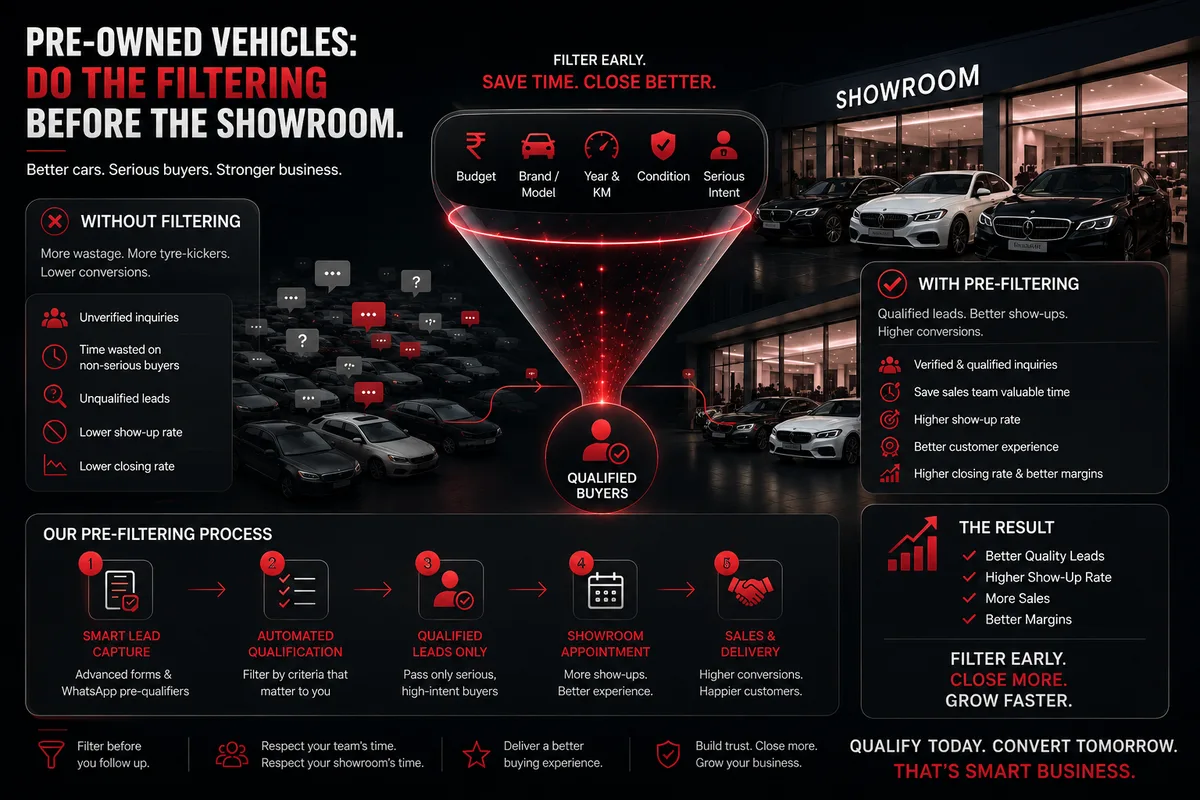
The problem. A pre-owned car dealership generates two hundred enquiries a month and converts a handful. Most callers want a price on a specific car, discover it has sold or is beyond their budget, and hang up. The sales team spends its day on the phone and its evenings wondering where the buyers are.
Pre-owned inventory is unforgiving. Each vehicle is unique, ties up capital, and loses value while it waits. A dealership that fills its day with unqualified calls is not merely wasting time, it is holding stock longer, and holding cost is the margin.
The second cost is trust. A buyer who is quoted one price on the phone and finds another at the showroom does not simply walk away from that car, they stop believing the dealership.
In most categories you qualify on budget and intent. In pre-owned vehicles you also have to qualify on a specific unit, because the buyer is not choosing a model, they are choosing one car with a particular history, mileage and price.
That means generic advertising produces generic enquiries. A campaign promoting the dealership rather than the stock will generate calls from people describing a car you do not have.
Every question a caller asks that could have been answered on the listing is a call you paid for and did not need.
The most common and most damaging fault. Advertising a car that sold last week produces enquiries you cannot fulfil, wastes media on stock that no longer exists, and starts every conversation with a disappointment.
If inventory turns quickly, the advertising has to turn with it. That is an operational discipline more than a marketing one, and it is worth more than any creative improvement.
Vehicle-level campaigns, driven by your live inventory, reach people searching for the specific thing you have. The enquiry then arrives already attached to a car, a price and a specification, which is most of qualification done before anyone speaks.
Brand advertising still has a place, but it should sit alongside inventory advertising rather than replace it.
Not enquiries. Test drives, and days to sell.
Days to sell is the number that connects marketing to profit in this business, because every day a vehicle sits is holding cost. A campaign that produces fewer enquiries and shortens days to sell is unambiguously better, and no enquiry-count report will show it.
Publish price, history and honest photographs so the filtering happens before the call. Keep listings synchronised with real stock. Advertise individual vehicles rather than the dealership. Judge it on test drives and days to sell.
Our luxury and automobile marketing page covers inventory-led campaigns, or tell us your days to sell and we will tell you what is slowing it.

Question about SEO, ads or leads? Ask away.
 How can we help?Ask our assistant, or talk to a human.
AI can make mistakes. For quotes, use WhatsApp.